 - v2.jpg)
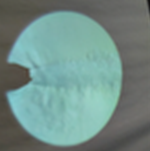 IMAGE COPYRIGHT: Preethi Rajendram Soundararajam (2025)
 Seeing the unseen: visualising air out of a hairdryer
Join Dr Preethi Rajendram Soundararajan, Dr Dea Wangsawijaya (Aerodynamics and Flight Mechanics Research Group, Department of Aeronautical and Astronautical Engineering), and Dr Yadira Sanchez-Benitez (Winchester School of Arts) to see the unseen: hot air rushing out of a hair dryer. We can feel its warmth and force on our skin, yet the flow itself remains invisible. This demonstration reveals that hidden motion using schlieren imaging, an optical technique widely used in aerodynamics and combustion research to make transparent flows visible.
Schlieren works by detecting tiny changes in air density. When air is heated by a hair dryer, its density becomes lower than the surrounding cooler air. Although our eyes cannot see these differences, they bend light ever so slightly. A carefully arranged optical system converts these minute light deflections into striking visual patterns, allowing the flow to appear on a screen in real time.
As the hair dryer is switched on, visitors will see swirling plumes, jet-like structures, and unsteady motion emerging from the nozzle. Changes in temperature setting, fan speed, or direction immediately alter the visualised flow, linking what is seen to what is felt by hand.
This simple, familiar object becomes a powerful example of how physics and optics help scientists "see the unseen," transforming everyday experiences into a window on fluid motion and heat transfer.
Schlieren works by detecting tiny changes in air density. When air is heated by a hair dryer, its density becomes lower than the surrounding cooler air. Although our eyes cannot see these differences, they bend light ever so slightly. A carefully arranged optical system converts these minute light deflections into striking visual patterns, allowing the flow to appear on a screen in real time.
As the hair dryer is switched on, visitors will see swirling plumes, jet-like structures, and unsteady motion emerging from the nozzle. Changes in temperature setting, fan speed, or direction immediately alter the visualised flow, linking what is seen to what is felt by hand.
This simple, familiar object becomes a powerful example of how physics and optics help scientists "see the unseen," transforming everyday experiences into a window on fluid motion and heat transfer.
You may also like
Solar System Extravaganza!
Enjoy a range of Solar System-themed activities designed for younger children! They can colour in planets, arrange inflatable worlds in the correct order, and create a scaled " ...Read More
Highfield Campus
Make waves to save our coasts!
Imagine your local seaside town is flooding and the beach is being washed into the sea during storms and high tides - what would you do? With climate change, these events will beco ...Read More
Highfield Campus
